
A good man out of the good treasure of his heart bringeth forth that which is good; and an evil man out of the evil treasure of his heart bringeth forth that which is evil: for of the abundance of the heart his mouth speaketh. Luke 6:45 KJV https://bible.com/bible/1/luk.6.45.KJV
Category: Uncategorized
101 Blessings: 101 Messages to Encourage & Inspire
Day 2: Did you know God has a plan for you? Did you know there is a purpose for why you were born?
Jeremiah 29:11 King James Version
11 For I know the thoughts that I think toward you, saith the Lord, thoughts of peace, and not of evil, to give you an expected end.
Using the Biblehub for commentary resource: Listing two resources below for you.
Ellicot’s Commentary for English Readers:
(11) For I know the thoughts . . .—The word used for “saith the Lord” implies that the gracious promise came to the prophet’s soul as an oracle from heaven. In the “thoughts” of God there is, perhaps, a reference to what had been said before of the Babylonian exiles in Jeremiah 24:6.
To give you an expected end.—Better, to give you a future (that which is to be hereafter) and a hope. This is the literal rendering of the words, and it is far more expressive than that of the English version. An “expected end” may be one from which we shrink in fear or dislike. Each word, in the amended translation, has its full meaning. The “future” tells them that their history as a people is not yet over; the “hope” that there is a better time in store for them. To wait for that future, instead of trusting in delusive assurances of immediate release, was the true wisdom of the exiles.
Barnes’ Notes On The Bible:
An expected end – Rather, a future and a hope. The nation shall not come to an end; the exile shall be followed by a restoration.
Great You Are by Jordan Smith
Going through the Bible a chapter a day
https://www.biblegateway.com/passage/?search=Numbers%2014&version=KJV
God bless you and your loved ones.
Elijah: Faith and Fire by Priscilla Shirer
Day 2 of 5:
Just Like Me
Read Acts 14:15.
Legendary. Larger than life. A “colossus amongst ordinary men”(1) is how Elijah is described by many scholars who have written about his place in biblical history.
The Bible sets him beside Moses as the primary prophetic figure of the Old Testament and uses him as a point of spiritual reference throughout the New Testament, centuries after he lived. He seems almost superhuman, right? An exception to the rule instead of an example to which we can aspire.
Yet before we even let that doubt begin to blossom in our minds, the writer of the Book of James tells us something we all need to remember.
Turn to James 5:17. In your notes, write just the opening phrase of it—the part up through the first comma or so. Why is this point important to readers like us today?
I tend to put other people on a pedestal—people who appear to experience God and exercise their faith at a level that seems beyond my reach, people for whom He appears to be present, active, and available in ways that apparently don’t apply to the rest of us.
I’ve noticed many reasons why we all tend toward this. I’ll mention two of them, then I’ll let you personally and prayerfully consider them: (1) the pedestal creates a safe distance between us. It makes me think the reason there’s such a difference in how they live, versus how I live, is because they’re just so different from me to begin with. And so (2) the pedestal allows me to set a lower bar for myself. Since living like them is so far above me, I feel like I can afford to placate my own laziness, my complacency, my lack of spiritual sacrifice and diligence. After all, who am I? I’m not even in their league. They’re in a whole other category. I’m just an ordinary person.
We get ourselves (and others) into so much needless trouble when we insist on building these pedestals for people who, underneath it all, are Just. Like. Us.
Just like Elijah.
So while Elijah is an example for us, he is not an exception to us. We must resist our tendency to venerate him and other biblical heroes like him. None of the biblical heroes were intended to be an exception; they are all meant to be examples to us of what happens when an ordinary life intersects with an extraordinary God.
(1) F. B. Meyer, The F. B. Meyer Collection, Elijah and the Secret of His Power, preface.
Acts 14:15 King James Version
15 And saying, Sirs, why do ye these things? We also are men of like passions with you, and preach unto you that ye should turn from these vanities unto the living God, which made heaven, and earth, and the sea, and all things that are therein:
James 5:17 King James Version
17 Elias was a man subject to like passions as we are, and he prayed earnestly that it might not rain: and it rained not on the earth by the space of three years and six months.
Psalm 19:1 KJV
The law of the LORD is perfect, converting the soul: The testimony of the LORD is sure, making wise the simple. Psalm 19:7 KJV https://bible.com/bible/1/psa.19.7.KJV
Going through the Bible a chapter a day
https://www.biblegateway.com/passage/?search=Numbers%2013&version=KJV
God bless you and your loved ones.
101 Blessings: 101 Messages to Encourage & Inspire
Day 1: Today’s message is scripture. Amazing to know someone loves you with an Everlasting love and this love comes from the Lord. Highlight it in your Bible or write it down and remind yourself when you feel unloved that the Lord loves you and that it is everlasting.
Jeremiah 31:3 King James Version
3 The Lord hath appeared of old unto me, saying, Yea, I have loved thee with an everlasting love: therefore with lovingkindness have I drawn thee.
Elijah: Faith and Fire by Priscilla Shirer
Day 1 of 5:
The Real Deal
Read 1 Peter 5:10.
Several years ago I took on the task of reading the Bible through in a year. Frankly, I found it a bit overwhelming. (Wrangling three small children at the time probably had a little something to do with it.) Maybe I needed the two-year plan, where I could take it more slowly and digest things a little more fully that way. Yet I distinctly remember, when I came to Elijah’s narrative in 1 Kings that year, how I felt completely consumed by the startling boldness of his faith, especially the one big highlight that stands out from his story: Mount Carmel.
Read 1 Kings 18:19-39.
Imagine if Elijah were sitting beside you right now. What are the top three questions you’d like to ask him about his memories from that day?
As I think through the conversation I’d like to have with Elijah, I try to picture how he might interact with me. While I’d be all zeroed in on the spectacular moments of the story, I wonder if he’d intentionally point to other things—simpler, more foundational things, even difficult things that made up the underbelly of his journey with God. I wonder if he’d accentuate those quieter happenings from earlier in his life, in passages preceding 1 Kings 18, verses that are filled with refining and pruning.
This moment of biblical proportions, high atop Mount Carmel, followed a much less public process that God had begun in him years before—a process that is already happening in you as well, which your loving Father will continue to develop throughout this study—a progression of development that I hope you’ll begin to recognize and value more than ever before.
I’m assuming you’re here with me because we both want what Elijah had. But the question for us remains: Are we willing to do what Elijah did to get what Elijah got?
You have no idea how I wish I could lean in right now and see how you’ve prayerfully responded. Then I’d move out of the way and let you peer into mine. Because right here is where the battle is about to be waged—on the thin edge that exists between our eager anticipation about the next level where God is calling us and the prickling fear we sometimes feel about what it will cost us to get there.
1 Peter 5:10 King James Version
10 But the God of all grace, who hath called us unto his eternal glory by Christ Jesus, after that ye have suffered a while, make you perfect, stablish, strengthen, settle you.
1 Kings 18:19-39 King James Version
19 Now therefore send, and gather to me all Israel unto mount Carmel, and the prophets of Baal four hundred and fifty, and the prophets of the groves four hundred, which eat at Jezebel’s table.
20 So Ahab sent unto all the children of Israel, and gathered the prophets together unto mount Carmel.
21 And Elijah came unto all the people, and said, How long halt ye between two opinions? if the Lord be God, follow him: but if Baal, then follow him. And the people answered him not a word.
22 Then said Elijah unto the people, I, even I only, remain a prophet of the Lord; but Baal’s prophets are four hundred and fifty men.
23 Let them therefore give us two bullocks; and let them choose one bullock for themselves, and cut it in pieces, and lay it on wood, and put no fire under: and I will dress the other bullock, and lay it on wood, and put no fire under:
24 And call ye on the name of your gods, and I will call on the name of the Lord: and the God that answereth by fire, let him be God. And all the people answered and said, It is well spoken.
25 And Elijah said unto the prophets of Baal, Choose you one bullock for yourselves, and dress it first; for ye are many; and call on the name of your gods, but put no fire under.
26 And they took the bullock which was given them, and they dressed it, and called on the name of Baal from morning even until noon, saying, O Baal, hear us. But there was no voice, nor any that answered. And they leaped upon the altar which was made.
27 And it came to pass at noon, that Elijah mocked them, and said, Cry aloud: for he is a god; either he is talking, or he is pursuing, or he is in a journey, or peradventure he sleepeth, and must be awaked.
28 And they cried aloud, and cut themselves after their manner with knives and lancets, till the blood gushed out upon them.
29 And it came to pass, when midday was past, and they prophesied until the time of the offering of the evening sacrifice, that there was neither voice, nor any to answer, nor any that regarded.
30 And Elijah said unto all the people, Come near unto me. And all the people came near unto him. And he repaired the altar of the Lord that was broken down.
31 And Elijah took twelve stones, according to the number of the tribes of the sons of Jacob, unto whom the word of the Lord came, saying, Israel shall be thy name:
32 And with the stones he built an altar in the name of the Lord: and he made a trench about the altar, as great as would contain two measures of seed.
33 And he put the wood in order, and cut the bullock in pieces, and laid him on the wood, and said, Fill four barrels with water, and pour it on the burnt sacrifice, and on the wood.
34 And he said, Do it the second time. And they did it the second time. And he said, Do it the third time. And they did it the third time.
35 And the water ran round about the altar; and he filled the trench also with water.
36 And it came to pass at the time of the offering of the evening sacrifice, that Elijah the prophet came near, and said, Lord God of Abraham, Isaac, and of Israel, let it be known this day that thou art God in Israel, and that I am thy servant, and that I have done all these things at thy word.
37 Hear me, O Lord, hear me, that this people may know that thou art the Lord God, and that thou hast turned their heart back again.
38 Then the fire of the Lord fell, and consumed the burnt sacrifice, and the wood, and the stones, and the dust, and licked up the water that was in the trench.
39 And when all the people saw it, they fell on their faces: and they said, The Lord, he is the God; the Lord, he is the God.
Going through the Bible a chapter a day
https://www.biblegateway.com/passage/?search=Numbers%2012&version=KJV
Welcome to a weeks review, we last left off with Numbers 6.
Numbers 6: (from my Bible notes)verses 1-20: These verses outline the vow of the Nazarite. Temporary vow of spiritual dedication. There are three marks of this vow, called a separation to God: abstaining from wine and grape products, not touching dead bodies, and not cutting one’s hair. The word translated to the Nazarite is related to a Hebrew term that carries the idea of both a vow and a crown. Below is notes from my Bible on verses 22-27.
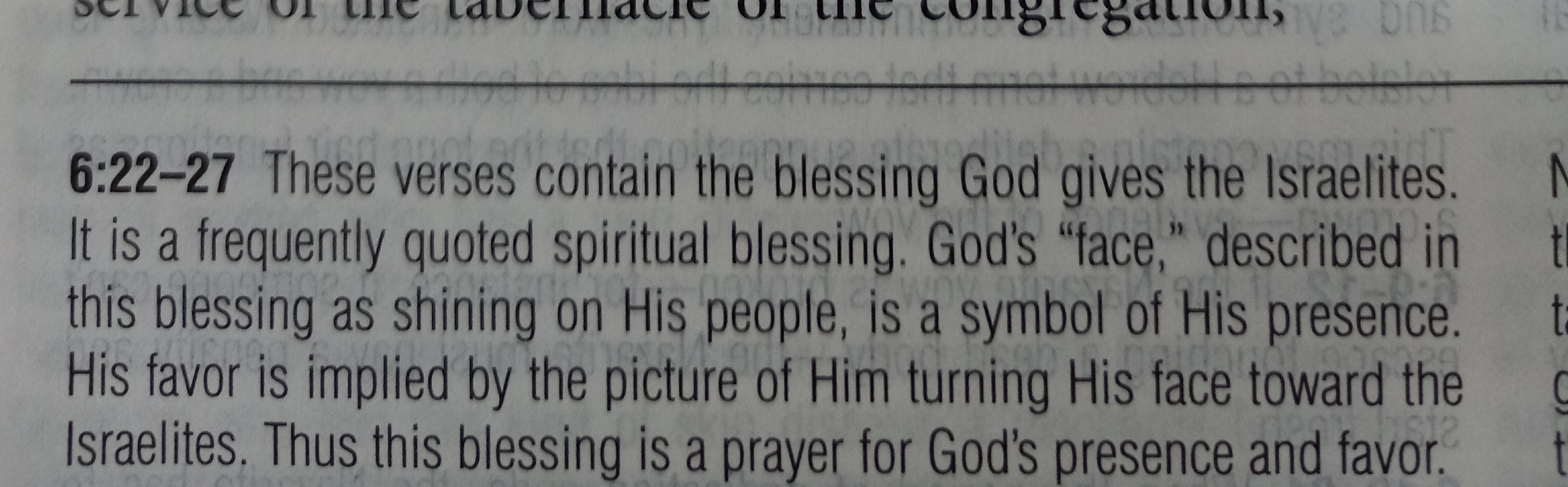
Numbers 7: (notes from my Bible) Chapters 7-9 describe the dedication of the tabernacle. The events of chapters 7-9 actually precede the events described in chapters 1-6. Numbers 7 is the second longest chapter in the Bible. It describes the 12 day festival in which the people bring gifts to be used in the tabernacle. Each day different tribes send a representative to offer the gifts. There is much repetition, but to the original readers of Numbers this repetition is understood as emphasis.
Numbers 8: God is establishing what it means to be set apart for His service. First Peter 2:9 tells us that all believers are a “royal priesthood.” We are set apart unto God for His purpose and glory.
Numbers 9: God commands them to commemorate the passover.
Nunbers 10: God commands Moses to make two hammered trumpets of silver. They were blown for several reasons to gather the people, to sound the alarm for the camps to begin to move, and to mark solemn days.
Numbers 11: the Israelites were complaining and not turninv their attention to God. Complaining because of the food provided by God and had forgotten all God had provided and got them out of enslavement as part of their lives in Egypt and only remember the food.
Below is a note from my Bible for Chapter 12 of Numbers:
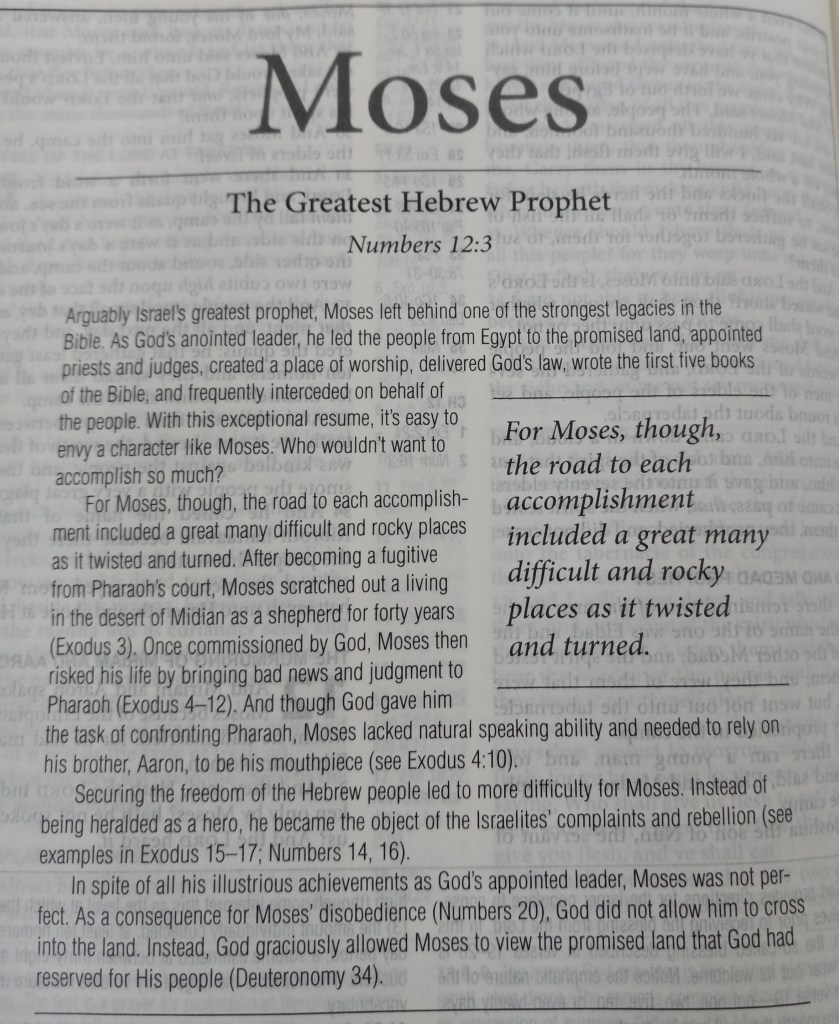
Chapter 12 in my Bible is titled The Murmuring of Miriam and Aaron. They are dissatistfied with Moses and challenge the leadership of Moses sole mediator between God and Israel. Of course we see that the charges are dropped against Moses and Miram contracts Leprosy as being the sole leader. Aaron appolizes to Moses and oleads to Moses on behalf of Miram to rid her of leprosy. If you we call you are out cast and set apart from the Israelites as you are considered unclean. For they are meant to be kept Holy. Moses goes to God on her behalf.
God bless you and your loved ones.
 Kirsten's Christian Corner